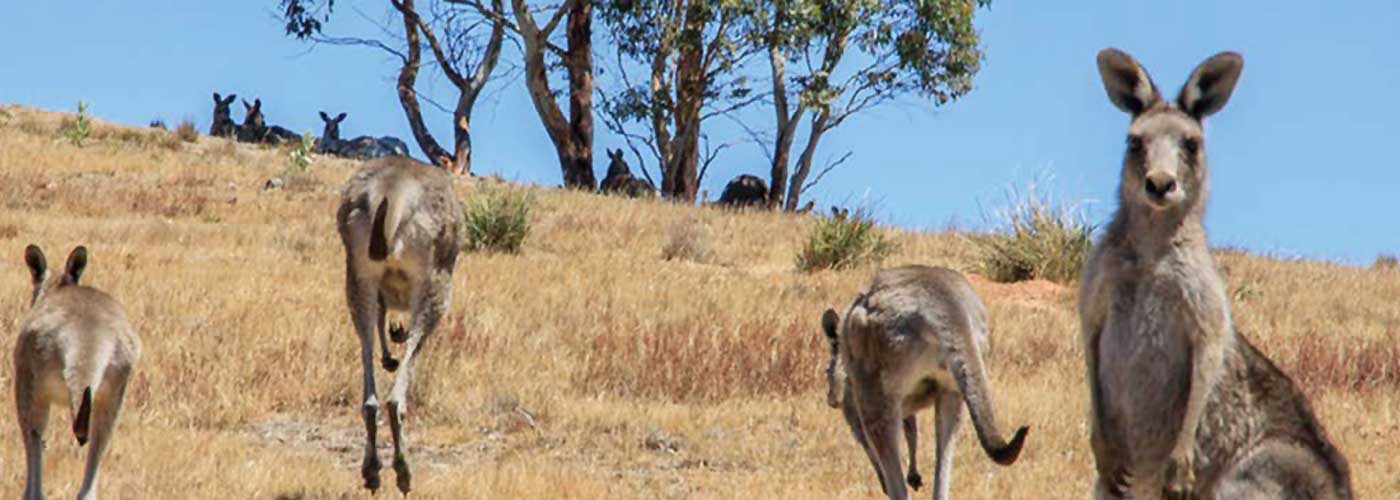
Kangaroos are a widely recognised symbol of Australia and, like all native fauna, are protected in all Australian states and territories. However, some kangaroo species are so abundant that the Australian Government has deemed they can be harvested for ecological and land management reasons. Commercial harvesting does not take place in every Australian state and territory, but each state and territory acknowledges that overabundant macropods impact on landscapes and sustainable agriculture and provide permits to “manage” them.
What are the issues?
- Kangaroo populations become overabundant after good seasons
- Overpopulation of kangaroos leads to overgrazing, damages landscapes and accelerates the onset of drought
- During prolonged droughts, numerous kangaroos die from starvation, thirst, disease and roadkill
- Aboriginal communities in some areas have identified that they have limited access to culturally safe traditional foods like kangaroo
What are the opportunities?
- Improving welfare outcomes for kangaroo populations
- Integrated management programs
- Creating opportunities for improved access to culturally safe kangaroo meat for Aboriginal communities
- Creating opportunities for sustainable regional employment, particularly for Aboriginal communities
- Providing sustainable, healthy protein for a growing global population
- Better planning, collaboration, research and information sharing
Aboriginal Hunting Rights in NSW
In NSW kangaroos, wallaroos and wallabies (collectively referred to here as kangaroos) are ‘protected animals’ under Schedule 5 of the Biodiversity Conservation Act 2016.
It is an offence to harm (including kill, injure or capture) a kangaroo or attempt to harm a kangaroo (including hunt, pursue or use anything for the purpose of harming) without a licence. The BCA provides that ‘an Aboriginal person (or any dependant of an Aboriginal person)’ does not commit an offence of ‘harming, attempting to
harm or possessing protected animals’ if this is for ‘his or her own domestic purposes’ (Section 2.8.1k), except where such and act is done ‘in a declared area of outstanding biodiversity value’ (Section 2.8.2). However, since the provision is worded in terms of a permissible defence to such a charge it is by no means clear if Aboriginal people can take kangaroo for domestic purposes without fear of prosecution.