• Skip to main content

Kangaroo Management Taskforce

Kangaroo Management Taskforce

  • About
    • A national approach
  • Kangaroo Management
    • Kangaroo Management Overview
    • SA Kangaroo Partnership Project
    • Commercial harvesting of kangaroos
    • Culling Kangaroos for Damage Mitigation
  • Animal welfare
    • Animal Welfare Overview
    • Kangaroos are protected native animals in every state and territory
    • Kangaroos are dying on Australian roads
  • Literature
  • Resources
    • Fact Sheets
    • Useful Links
    • Frequently Asked Questions
    • Videos
  • Contact

Main Content

Kangaroo

Management

Working together for healthy sustainable landscapes & kangaroos

Why kangaroos need to be managed 

Kangaroos are one of the most abundant wild mammals in the world and the harvestable macropod species are some of the few Australian native animals that have thrived since European settlement.

After more than 50 years of kangaroo harvesting in Australia, populations of the harvestable kangaroo species are still abundant. Seasonal conditions, like good rain, are the main predictor of kangaroo populations, not harvesting. Kangaroo numbers increase significantly in good seasons and decrease dramatically in extended periods of drought.

The boom/bust population cycle is a natural process and can be found in many marsupials endemic to Australia. However, population peaks have increased since European settlement due to the proliferation of artificial water points, removal of predation through control of wild dogs, and a reduction in Aboriginal hunting.

Large increases in kangaroo populations, or irruptions, have significant implications for both natural resource management and sustainable agriculture, while the starvation of millions of kangaroos during drought is an untenable animal welfare outcome for our beloved national icon.

Australia has around 43 species of marsupial mammals of the Super-family Macropodoidea but all references to kangaroos on this website refer to the following 5 species unless otherwise specified.


In 2021 ecologists banded together to produce a special edition of the scientific journal Ecological Management & Restoration to bring this plight to light.


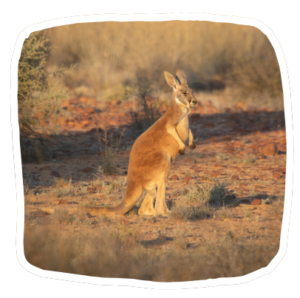
Red Kangaroo

(Osphranter rufus)

Red Kangaroos are the largest and most recognisable kangaroos in Australia. The males are typically red in colour, and can grow up to ~2 m tall and weigh 80 – 90 kg. Females (blue fliers) are smaller, typically 23 – 30 kg, and are often a pale bluish-grey (although they can also be red). Red kangaroos have an identifiable white stripe near their nose, and a pale tail.

Western Grey
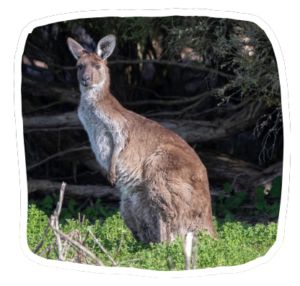
(Macropus fuliginosus)

Western grey kangaroos are slightly smaller and lighter than eastern greys with males reaching about 50 kg. They are dusty to chocolate brown in colour (often with a black patch around the elbow and dark brown face) Although eastern and western grey kangaroos are closely related, interbreeding in the wild is rare.

Eastern Grey
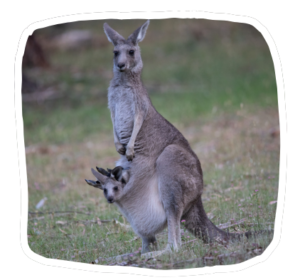
(Macropus giganteus)

Eastern grey kangaroos are grey-brown in colour with a pale grey face and dark shading around the eyes. Eastern grey males grow to 1.5 – 1.8 metres in height and may exceed 70 kg while the females rarely reach 35 kg. Eastern greys can hop as well as the big reds: up to nine metres in one bound, and reach speeds of nearly 50 km/h.


Common Wallaroo
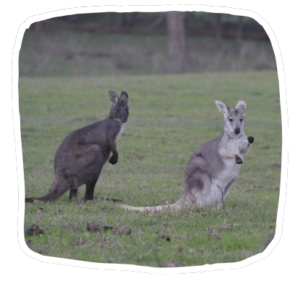
(Osphranter robustus)

Eastern Wallaroos have a robust build and inhabit the well-watered rocky hill country of the Great Dividing Range. In NSW wallaroos can be only be harvested in the Armidale, Upper Hunter and Glen Innes commercial harvest zones.

Euro
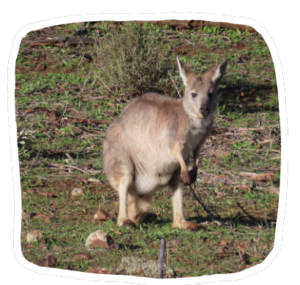
(Osphranter robustus  erubescens)

The Euro is the arid-zone sub-species of the most widespread kangaroo, the Common Wallaroo. The Euro is the smallest of the commercial kangaroo species, male Euros rarely exceed 50kgs and females 25kg. Euros are typically more sedentary and more solitary than Red Kangaroos.

The Kangaroo Partnership Project recognises that we work and live on Aboriginal land and pay our respect to Elders past, present and emerging. We extend our respect to all First Nations peoples and acknowledge the strength, resilience and survival of all First Nations peoples throughout our history. Australia was, and always will be, Aboriginal land.

Copyright © 2026 Website by Bushmedia Digital & Design | Log in